

In light of recent action by Orlando Mayor Dyer, City Council, city staff and developers and #DTO to make historic preservation their scapegoat for holding back development downtown rather than owning their lack of creativity and public engagement, this article published with permission is a contrast with how successful civic leadership functions.
Orlando City Council Votes 4-2 to Pass Downtown Historic District Moratorium
After lengthy public comment, mostly opposed to the proposed moratorium and a PowerPoint presentation by Commissioner Sheehan, the council members read brief prepared statements in opposition. Commissioner Sheehan and Burns were the only 2 votes against and Ortiz was absent for the vote.
According to the State Coordinator for the Department of Certified Local Government, (CLG), in Tallahassee the city’s accreditation as a certified local government is at risk of being decertified due to the removal of the preservation board review component. Decertification will result in the loss of state grants for not only the Downtown Historic District but also the 5 residential districts and 47 landmarks. This will affect over 1800 properties citywide. Over the past decade the agency has granted over $7 million dollars in Orlando.
Commentary: Strengthen downtown without sacrificing history
Reposts from the Orlando Sentinel, originally published June 14, 2026
By SARAH M. BOYE
For much of Orlando’s history, downtown was the center of daily life.
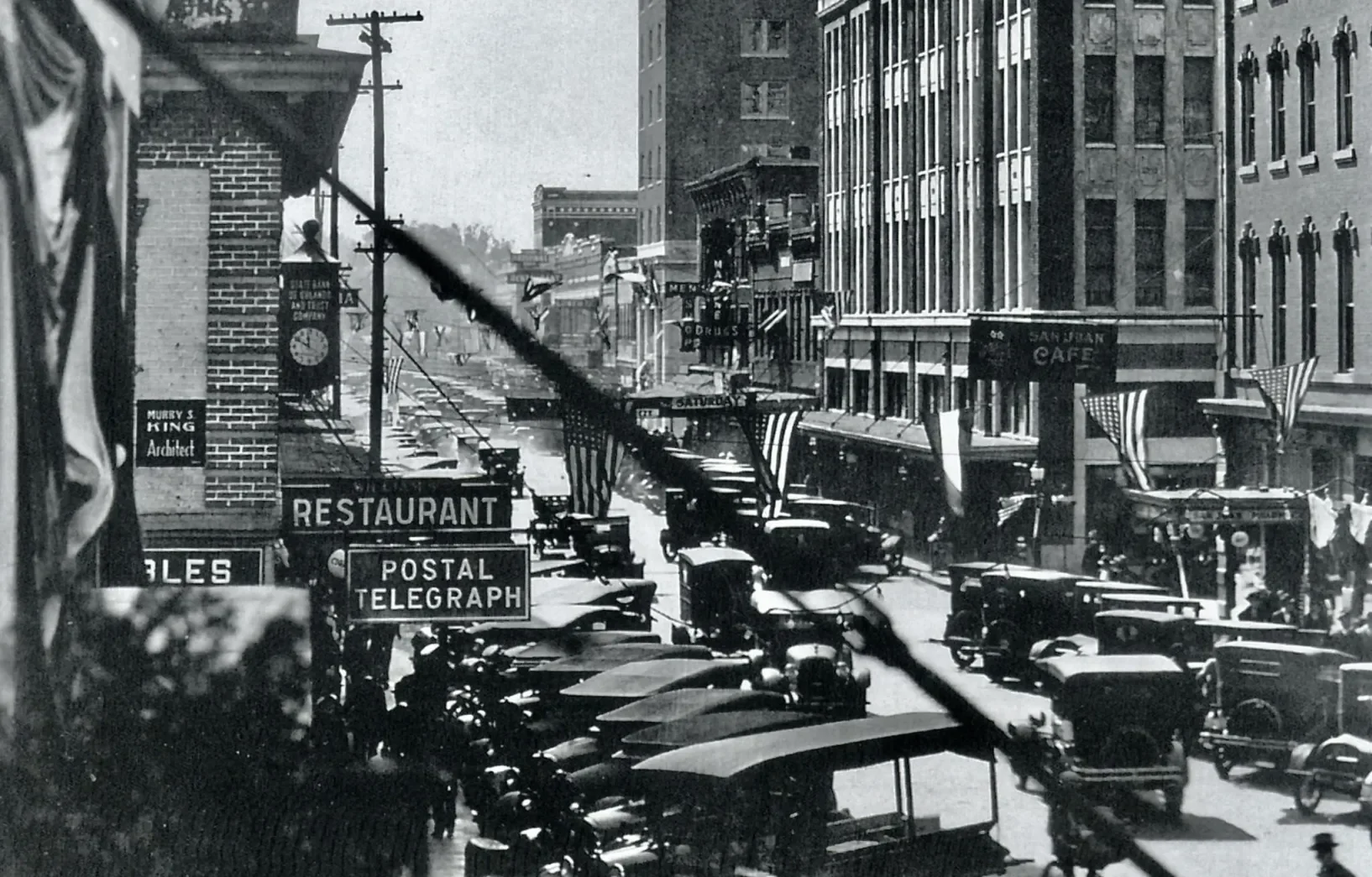
Before shopping malls, theme parks and suburban office complexes reshaped Central Florida, downtown Orlando was where people went for almost everything. They shopped at Dickson-Ives, attended court, caught trains, and dined along Orange Avenue and Church Street. Downtown was not merely a destination. It was the heart of Orlando’s economic and social life.
That began to change in 1956 with the opening of Colonial Plaza. As one of the region’s first suburban shopping centers, it signaled a shift that would continue for decades as retail and commercial development followed Orlando’s outward growth. Downtown gradually lost its role as Central Florida’s primary shopping district.
Another transformation came with the success of Church Street Station in the 1970s and 1980s. Downtown reinvented itself as an entertainment destination. Rather than serving as the place where people conducted their daily business, it increasingly became a place people visited for specific experiences.
Today, downtown continues to search for its next chapter. Public comments and conversations with locals reveal reoccuring concerns: empty storefronts, fewer people filling the streets during the day, a shortage of everyday retail, parking challenges, and worries about safety or quality of life. The city continues to invest in housing initiatives and homelessness services while pursuing projects to improve walkability and attract visitors. Yet many remain unconvinced.
That uncertainty sits at the center of a recent debate over Orlando’s Downtown Historic District. Earlier this month, the Orlando City Council advanced a proposal to suspend portions of the district’s historic review process for three years in hopes of encouraging investment and redevelopment. Supporters argue the change could help revitalize a stagnant corridor. Critics question whether one of Orlando’s smallest districts is responsible for challenges across downtown.
Some preservation advocates and Historic Preservation Board members have also questioned the speed of the process, noting that the proposal moved from announcement to council consideration in a matter of days. Regardless of one’s position, a decision about downtown’s historic core deserves thoughtful public discussion.
The debate is worth having. But it risks overlooking a larger reality: downtown’s challenges did not begin with historic preservation, and they will not be solved by historic preservation alone.
The Downtown Historic District occupies just eight blocks and includes some of Orlando’s oldest surviving commercial buildings built between the 1880s and the 1940s. It was created in 1980 because Orlando had already lost much of its architectural heritage to decades of redevelopment.
Supporters of the moratorium argue that a more flexible review process could encourage investment and adaptive reuse. That goal is understandable. Vacant buildings help no one, and historic structures must be allowed to evolve if they are going to remain useful. Preservation advocates note that the district represents only a small portion of downtown and question whether it can be blamed for broader urban challenges.
After all, the concerns residents raise most often are not about historic buildings. The real question is what downtown is supposed to be. It is no longer the region’s primary shopping district, and the nightlife-driven model that emerged during the Church Street Station era is not enough on its own. People want more reasons to spend time downtown: places to shop, dine, gather, and build community. They want a downtown that feels active and inviting.
History offers an important lesson here. Cities thrive not because they demolish old buildings or preserve them. They thrive because people have reasons to be there.
That is why some of the city’s most promising ideas involve encouraging investment while preserving character. Tax incentives for rehabilitation, adaptive reuse, streetscape improvements and efforts to attract new businesses all can strengthen downtown without sacrificing the history that makes it distinctive.
Orlando’s historic district exists because so much of the city’s historic downtown was already lost. The buildings that remain are not obstacles to downtown’s future. They are part of what makes downtown worth saving in the first place.
Downtown deserves investment, new businesses and new residents. But regardless of how the current preservation debate is resolved, Orlando still faces the larger challenge that has shaped downtown for decades: deciding what role it should play in a region that long ago outgrew its historic core.
The city has spent generations trying to make downtown thrive. Before we blame one of Orlando’s smallest districts for downtown’s struggles, we should remember that downtown’s challenges long predate the district itself. Then we should answer a more important question: what kind of downtown do we want to create?
Orlando Historic Preservation Board Responds to Proposed Moratorium, June 3, 2026
Orlando City Council Votes 6-1 Against Lubbe House Landmark
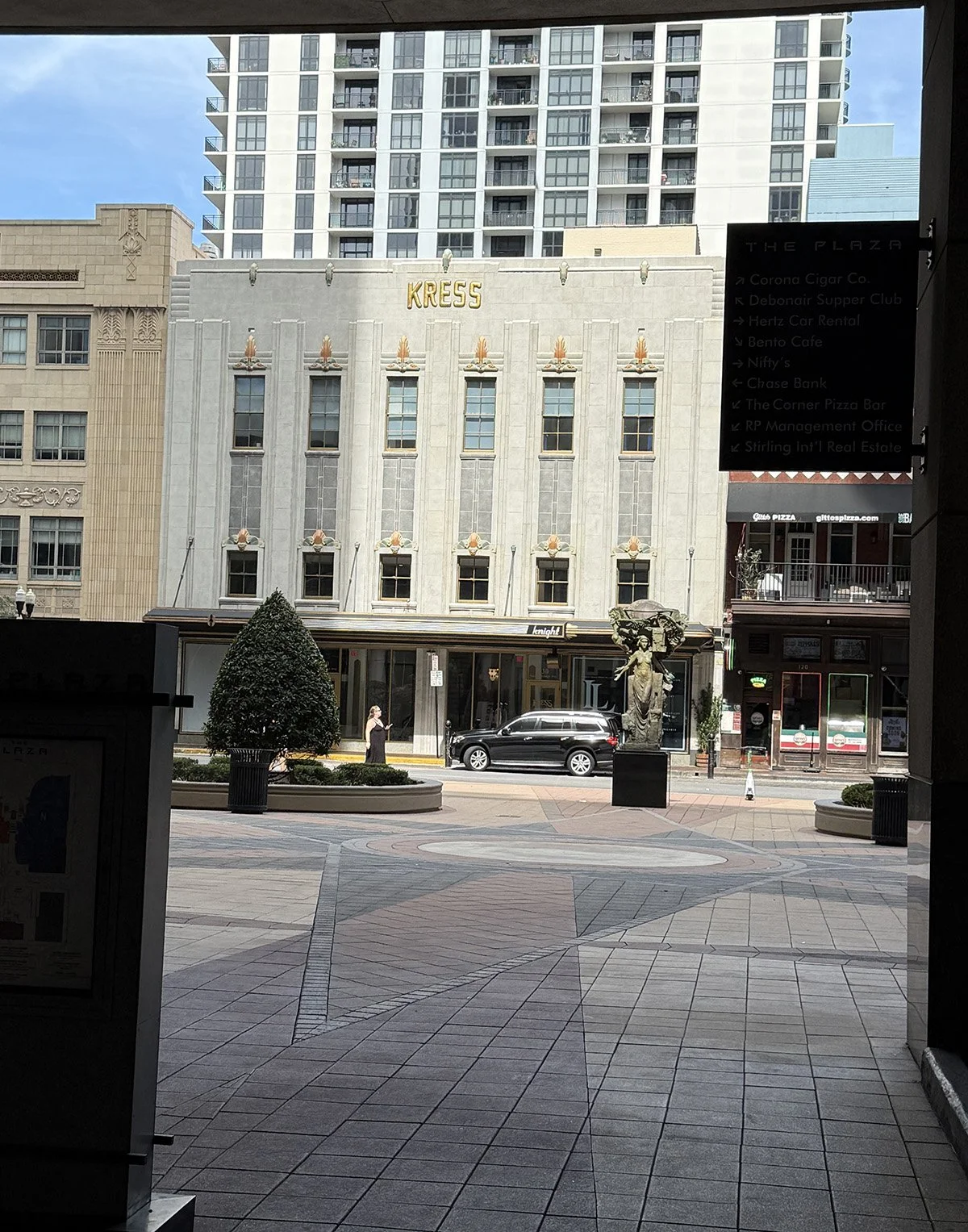
While this may not be the result we intended, it did put the Lubbe House in the public discussion. As Commissioner Sheehan stated, staff had admitted to her that concepts for the Lake Eola Southwest gateway was to demolish the Lubbe House. Apparently staff had not shared this with the Mayor. There was no previous public declaration to save the house until she made it public. Though it is encouraging to hear Mayor Dyer state 'the Lubbe House will not be demolished', the door is left open for the CRA's structural assessment. Their printed response keeps mentioning the possibility of "asbestos" without any substantiation. It is important to note that asbestos was not widely common until the 1940s, in particular in residential application. Should the CRA's hired inspection agency's finding determine any threats the CRA can apply for immediate demolition without any public review. This would be similar to what happened to the historic McCrory's/Woolworth Building on Orange Ave where the Plaza now sits.
It is ironic that the Mayor and Council would leave the potential for millions of dollars in state and private grants on the table while claiming 'high costs' for rehabilitating the structure. There are currently no plans that support their claim.
Until the plans for the Gateway are final it is important for the public to stay involved. Commissioner Sheehan was able to have 2 public comment meetings included in the design phase. Once the dates are determined we will publish them so you may participate.
Additionally OPT has applied for consideration to the 2026 Florida Trust for Historic Preservation's list of Florida's 11 to Save. Determination will be in June.
A big THANK YOU to all who contacted the Mayor, Commissioners and planning staff and to those who attended the preservation board and city council meetings.
Orlando Preservation Board Voted Unanimously to forward Lubbe House Landmark Request to City council
On March 4th the Orlando preservation board voted unanimously to forward the landmark application to City Council. The City Council will hear the application on Monday March 16 first at the agenda review at 1pm followed by the council meeting at 2pm. All public comments were unanimous in support. Several members of the public including family and previous residents spoke.
It is important that we keep the momentum by communicain with elected officials.
Lubbe House Application for Landmark Designation by Orlando Historic Preservation Board being Heard March 4, 4pm
The Orlando HPB will hear Wednesday March 4th, 4pm in City Council chambers. This agenda item had been deferred from February’s agenda so that the planning department could prepare their response. Should the HPB approve the application it will then be sent to Orlando City Council on March 16th. At that meeting Orlando Mayor and City Council will vote to move the application forward for a full HPB discussion.
Mayor Dyer has publicly stated the ‘Lubbe House will not be demolished’ but that he opposes landmark status due to additional expenses during rehabilitation. The inclusion of the Lubbe House is incumbent on a structural evaluation by the hired construction firm Turner Construction.
The City Clerk has posted the agenda item on line which can be accessed at the following link
https://tinyurl.com/3ndremcv
Lubbe House Nominated for Orlando Landmark Possibly Threatened by Demolition
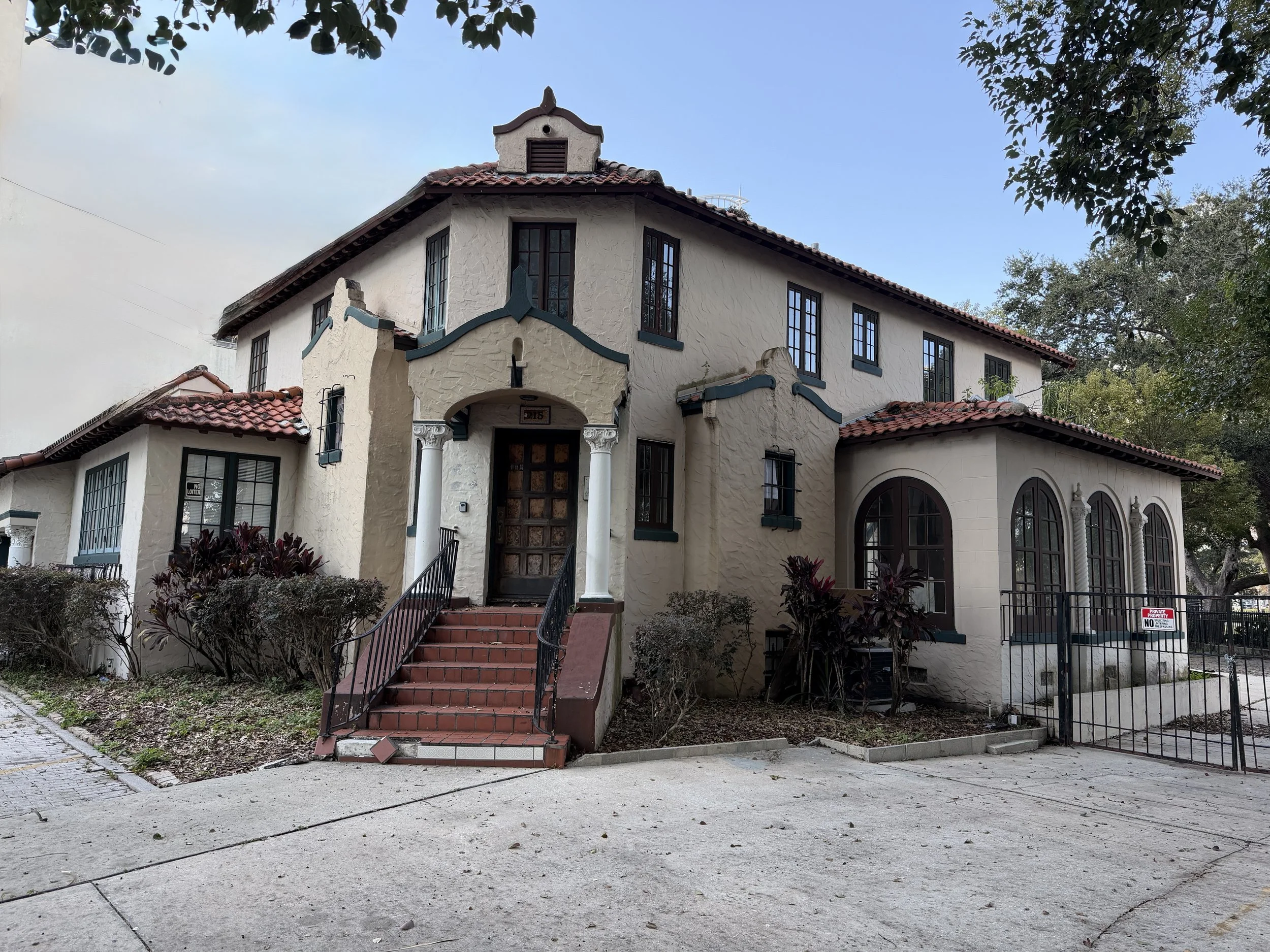
Orange Preservation Trust, OPT, has nominated
the Lubbe House located at 215 E Central Blvd
in downtown Orlando to the City of Orlando’s
Landmark list. The city has acquired the
property at the southwest corner of Lake Eola
Park and is planning a gateway entrance. The
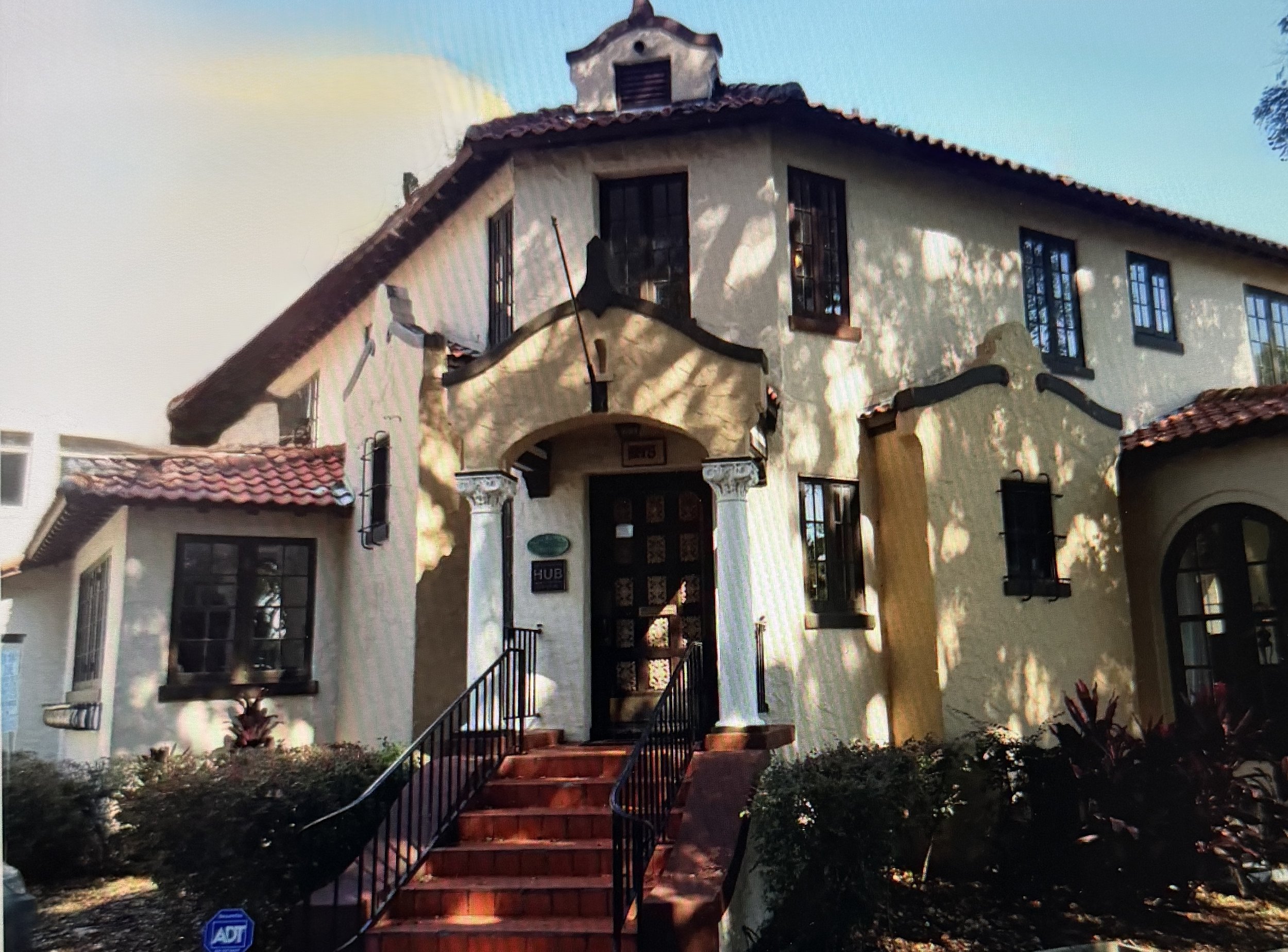
Lubbe House, (pictured), was constructed on the
site in 1930 and sites near the corner. According
to research done by Dr. Tana Porter, PhD
History, the undeveloped property has been
owned by several notable Orlandoans, most
notably Jacob Summerlin and Hobart Sperry.
Prior to development of the area much of the land was later sold to James Thornton. It was
Thornton, who is associated with what is now enjoyed as Thornton Park, that subdivided the area
and sold the parcel to the Lubbes to build their home.
The newspaper, Orlando Evening Star, reported the sale including Lubbe’s announcement that
he planned to build a residence on Central Avenue overlooking Lake Eola, a house that “would
be in keeping with the Florida setting but would be something different in tropical architecture.”
The newspaper followed its January twenty-third- announcement of the sale with a comment two
days later extolling the beauties of the property, calling it “one of the best purchases that have
been made in the history of Orlando. This is one of the most desirable locations in the city.
Orlando’s growth in commercial importance, in domestic enjoyment and in physical
beautification, will make the possibilities of the Lubbe location incomparable.”
The Lubbes took possession of their completed house in mid-November, 1930. On November
19, 1930, the Evening Star again described “one of the outstanding homes of Orlando,” and its
“Beautiful grounds with stately trees and artistic landscaping,” The “rich tint” of the stucco
exterior came from Chicago, and the “hurricane proof tiles, interlocking and overlapping to
prevent being torn off by storm,” came from Holland. “Solar heaters” and a new kind of a gas
furnace came from California. “Bird baths, unique urns, and garden furnishings” decorated the
lawns. Its Moorish architectural style framed by palm trees, the house fronted on Lake Eola. It
had three large bedrooms and two tile bathrooms, two sun porches and a balcony overlooking
Eola Park and its rose garden. Most of the furnishings were custom built for the house. Needlessto say this was meant as a building of place and permanence. The Lubbe House is the last
remaining home that was built on Lake Eola.
The city’s goal of place making benefits both residents and visitors alike by improving the
quality of life and economic interests of the community. Landmarking the Lubbe House will
work well with the city’s initiatives by recognizing the historic past and established sense of
place that creates a unique destination and also bridges our past with our future as the
surrounding park is enhanced. Landmarking the Lubbe House does not prevent the city from
changing the use of the building, modifying the building with additions to increase usable space
or minor adjustments to its position. Preservation and development are not mutually exclusive,
there are many examples globally that with creative design have produced celebrated spaces.
Over the past year Commissioner Sheehan had been going to speaking appearances at
neighborhood associations with assurances from Mayor Dyer that the Lubbe House was to be
included in redevelopment of the park. However, to her surprise and anger she has since been
advised that the house is to be deleted from plans. In her discussions with city planners she has
been told that the house needs to be demolished due to the high cost of restoration. When asked
for substantiation on their claim they were unable to provide any. She also asked why there has
not been any public inclusion in the design concept. During community events sponsored by the
Downtown Development Board, DDB, discussing 5 major initiatives downtown, when asked
about the inclusion of the Lubbe House, their reply was ‘there is no final decision’. Actual public
media of a suggested design entry gateway, the Lubbe House is clearly in the background.
On February 4th the Historic Preservation Board will hear the landmark request. Public presence
at the meeting would be invaluable. For those unable able to attend, letters in support are equally
helpful. If the request for landmarking is approved by HPB it will be sent to City council for
recommendation or denial at an expedited reading at the end of February. Those who have been
in Orlando for quite a while may remember the McCrory’s Five and Dime on Orange Avenue
request for historic protection. Under pressure from a developer the request was denied by
Mayor Dyer and the city council and demolition began immediately after the meeting and
continued all the through the night leaving a pile of rubble the next day. The Mayor and
Council’s action along with the immediate demolition denied any due process and opportunity
for the public to appeal their decision. It has happened before and it can happen again.
OPT is asking for support in approving this Landmark designation and keeping the Lubbe House
in any final park plans. We ask any organizations or by individual interested persons to send
letters/emails indicating your support. Communications can be sent to the City of Orlando
Preservation office as well as the Mayor and commissioners at the following email addresses. In
reference to the landmark request, it can be identified as either 215 E Central Blvd, Lubbe House
or HPB2025-10297
May is Historic Preservation Month

May is Historic Preservation Month. It’s a great time to renew your membership in preservation organizations such as the National Trust, Florida Trust and Orange Preservation Trust. Consider using their travel guides when making vacation plans this summer. Some of these memberships include discounts on accommodations, as well as entry fees to attractions and museums. Memberships also great make great gifts.
2023 Private Gardens of Historic Orlando, featuring the Lake Eola Heights Historic District, Sunday March 26 noon until 5pm
The “Private Gardens of Historic Orlando”, this year features the Lake Eola Heights Historic District. What started as a bi-annual tour of this neighborhood has become a yearly event featuring other historic neighborhoods throughout Orlando. You may begin the tour wherever you wish. The 8 gardens are identified by colorful banners in the parkway at each location. Visit as many as you wish. The tour begins at noon and ends at 5:00 pm. Garden Central will be at E. Amelia St and Broadway Ave in front of the Broadway United Methodist Church.
All of the Gardens on the tour offer something special, which may inspire you with ideas for your own garden or may simply provide you with an enjoyable day in a beautiful setting. Stroll along beautiful brick streets dappled by sunlight that has been filtered through a veil of oak boughs and Spanish moss. Downtown homes often have small back yards. Some of the gardens highlighted on today’s tour are wonderful examples of how to turn these spaces into beautiful outdoor rooms. Other gardens are included because of the creative way various elements have been incorporated into the garden. There are also wonderful examples of how to bring the calming and recuperative effects of water into the garden ranging from fountains to swimming pools! It is from her own garden that neighborhood artist Diane Martens found the inspiration for this year’s featured painting. The artwork has been incorporated into the tour’s posters and brochure. You can see more of Diane’s artwork at www.dianemartens.com. You are also encouraged to visit Garden Central at E. Amelia St at Broadway Ave. in front of Broadway United Methodist Church. There will be vendors as well as informational tables about garden and historic preservation.
Tickets are $25 day of the tour or advance purchased are $20 on-line at the link provided or at tour partner Eola General at 522 E Amelia St.