

Reposts from the Orlando Sentinel, originally published June 14, 2026
By SARAH M. BOYE
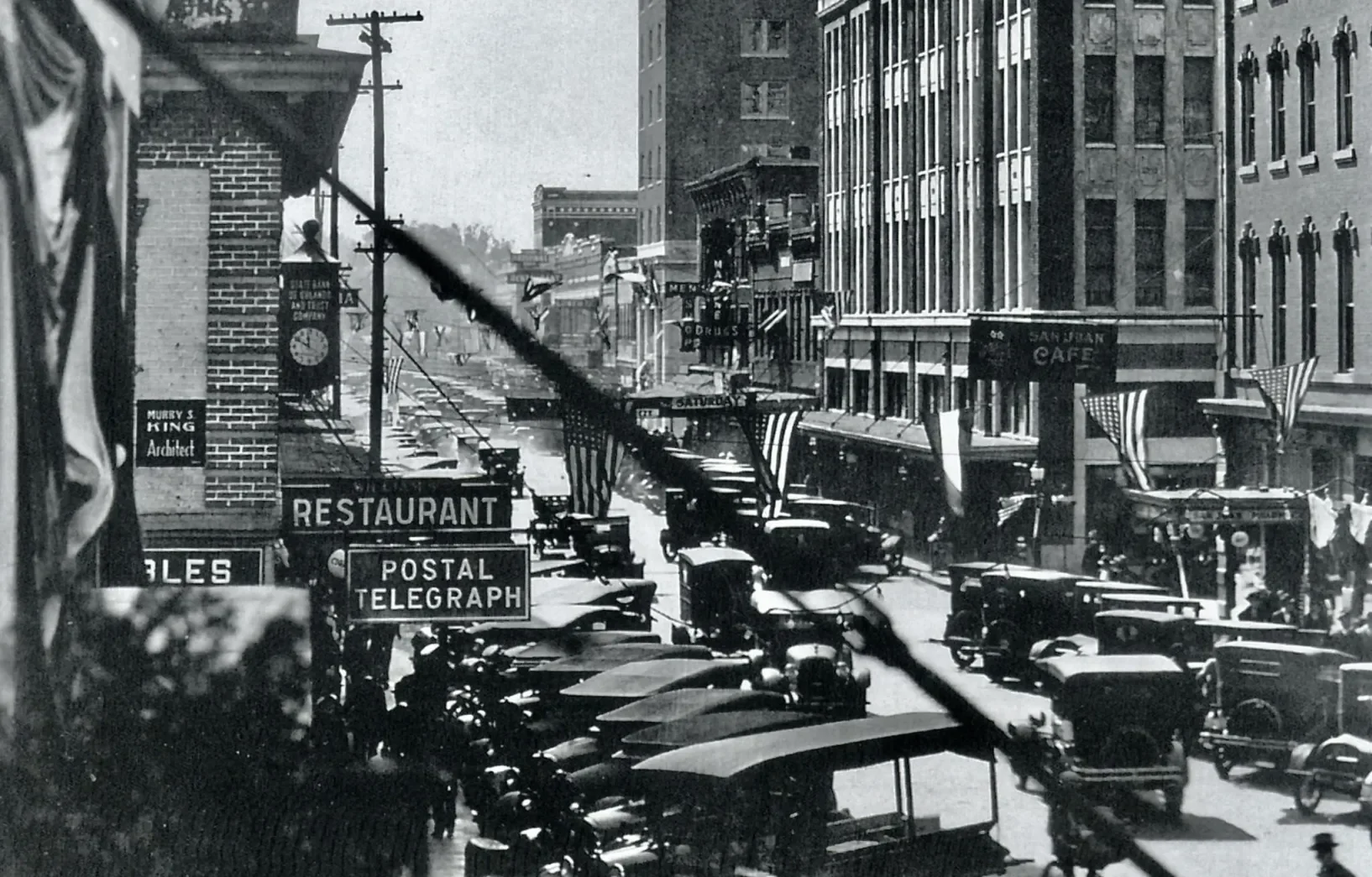
For much of Orlando’s history, downtown was the center of daily life.
Before shopping malls, theme parks and suburban office complexes reshaped Central Florida, downtown Orlando was where people went for almost everything. They shopped at Dickson-Ives, attended court, caught trains, and dined along Orange Avenue and Church Street. Downtown was not merely a destination. It was the heart of Orlando’s economic and social life.
That began to change in 1956 with the opening of Colonial Plaza. As one of the region’s first suburban shopping centers, it signaled a shift that would continue for decades as retail and commercial development followed Orlando’s outward growth. Downtown gradually lost its role as Central Florida’s primary shopping district.
Another transformation came with the success of Church Street Station in the 1970s and 1980s. Downtown reinvented itself as an entertainment destination. Rather than serving as the place where people conducted their daily business, it increasingly became a place people visited for specific experiences.
Today, downtown continues to search for its next chapter. Public comments and conversations with locals reveal reoccuring concerns: empty storefronts, fewer people filling the streets during the day, a shortage of everyday retail, parking challenges, and worries about safety or quality of life. The city continues to invest in housing initiatives and homelessness services while pursuing projects to improve walkability and attract visitors. Yet many remain unconvinced.
That uncertainty sits at the center of a recent debate over Orlando’s Downtown Historic District. Earlier this month, the Orlando City Council advanced a proposal to suspend portions of the district’s historic review process for three years in hopes of encouraging investment and redevelopment. Supporters argue the change could help revitalize a stagnant corridor. Critics question whether one of Orlando’s smallest districts is responsible for challenges across downtown.
Some preservation advocates and Historic Preservation Board members have also questioned the speed of the process, noting that the proposal moved from announcement to council consideration in a matter of days. Regardless of one’s position, a decision about downtown’s historic core deserves thoughtful public discussion.
The debate is worth having. But it risks overlooking a larger reality: downtown’s challenges did not begin with historic preservation, and they will not be solved by historic preservation alone.
The Downtown Historic District occupies just eight blocks and includes some of Orlando’s oldest surviving commercial buildings built between the 1880s and the 1940s. It was created in 1980 because Orlando had already lost much of its architectural heritage to decades of redevelopment.
Supporters of the moratorium argue that a more flexible review process could encourage investment and adaptive reuse. That goal is understandable. Vacant buildings help no one, and historic structures must be allowed to evolve if they are going to remain useful. Preservation advocates note that the district represents only a small portion of downtown and question whether it can be blamed for broader urban challenges.
After all, the concerns residents raise most often are not about historic buildings. The real question is what downtown is supposed to be. It is no longer the region’s primary shopping district, and the nightlife-driven model that emerged during the Church Street Station era is not enough on its own. People want more reasons to spend time downtown: places to shop, dine, gather, and build community. They want a downtown that feels active and inviting.
History offers an important lesson here. Cities thrive not because they demolish old buildings or preserve them. They thrive because people have reasons to be there.
That is why some of the city’s most promising ideas involve encouraging investment while preserving character. Tax incentives for rehabilitation, adaptive reuse, streetscape improvements and efforts to attract new businesses all can strengthen downtown without sacrificing the history that makes it distinctive.
Orlando’s historic district exists because so much of the city’s historic downtown was already lost. The buildings that remain are not obstacles to downtown’s future. They are part of what makes downtown worth saving in the first place.
Downtown deserves investment, new businesses and new residents. But regardless of how the current preservation debate is resolved, Orlando still faces the larger challenge that has shaped downtown for decades: deciding what role it should play in a region that long ago outgrew its historic core.
The city has spent generations trying to make downtown thrive. Before we blame one of Orlando’s smallest districts for downtown’s struggles, we should remember that downtown’s challenges long predate the district itself. Then we should answer a more important question: what kind of downtown do we want to create?